zetecinside.com
save on tyres

Fuel Injection
Last Updated on September 01 2008

I've been using Jenvey Fuel Injection throttle bodies since the car was first running, because I wanted to squeeze every last drop of horse power from the 2.0 Zetec. And when you look in to the costs of fitting the engine with a carburation system, the Injection route isn't that much more expensive than the side draught Weber route, once you've bought the manifold, filters, Ignition system (Black-Box), linkages, and of course the carburetors themselves. You don't need such a sophisticated Ignition System to manage carburetors (and therefore as expensive), but you still need something capable of producing a 3D ignition map. Some people have modifed the Zetec engine to accept a distributor, which is driven off the end of one of the camshafts. It looks quite odd, but the conversion is supposed to work quite well.

This page explains how the injection system comes together, what you get when you buy throttle bodies, and how to get the most from the system.

The model of throttle bodies that I've bought are the Jenvey TBP45i. They have a 45mm bore, which is the optimum size for my 2.0 engine. You can fit bodies with larger or smaller bore's, but thats down to the state of tune of the engine. Talk to your supplier and listen carefully to their advice. Biggest isn't necessarily the best when it comes to throttle bodies.

Here are the links to the suppliers listed on this page.
Jenvey Dynamics: Fuel Injection specialists. Check out their web site for more details - Jenvey Throttle Bodies
DTA fast. Engine Management Specialists - DTA Fast ECU's
Webcon(UK) Fuel Systems - Fuel Injection system suppliers

What do you get when you buy throttle bodies?

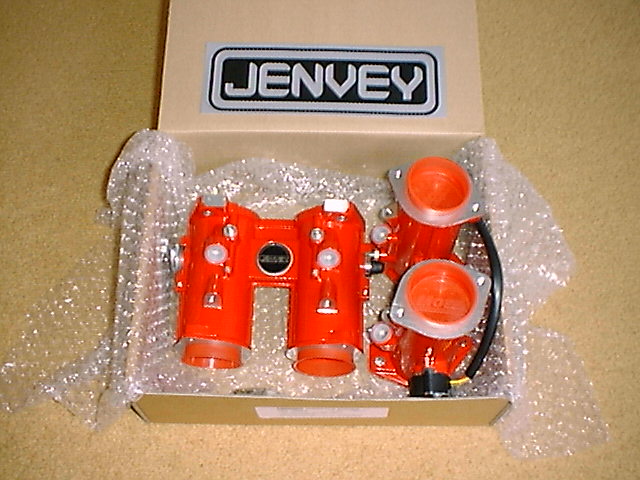
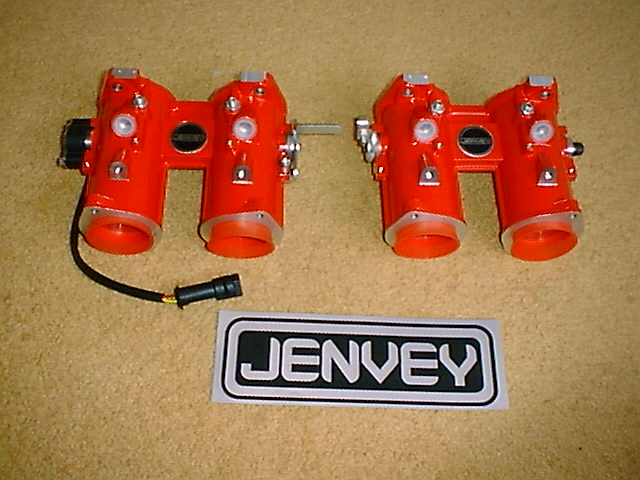
With the Jenvey TBP45i kit, you get two 45mm bodies, two fuel rails, and a small bag of screws, four O-rings, and four allen keys.

Jenvey throttle bodies Jenvey throttle bodies Jenvey throttle bodies

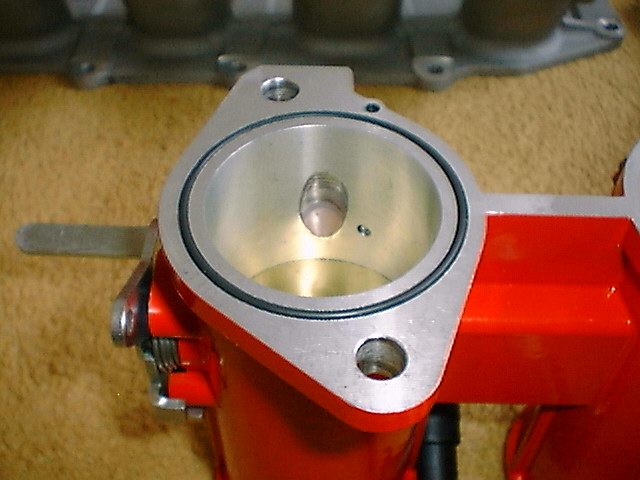
The bodies have a machined groove on the face that mates to the manifold, and the supplied O-rings are pressed in to the groove, and make an air tight seal when the bodies are mounted on the manifold. The manifold you see here, is purchased seperately, and below you'll find details on where I bought mine from.

O-ring gasket

What else will I need?

An Electronic Control Unit (ECU)

The ECU controls the injectors, and the ignition system. An ECU consists of a microprocessor which, using a 3D ignition and a 3D fuel map, reads information from sensors on the engine, and determines the amount of fuel the engine requires, and the right time to fire the spark plugs to ignite the mixture in the combustion chambers.

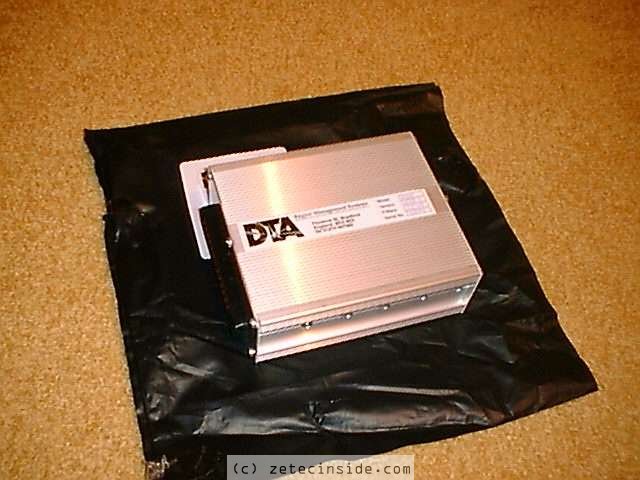
The ECU I've chosen is the DTA-Fast E48-EXP. It is packed full of excellent features, one of which is traction control, which will prove most useful when trying to get off the line in the wet. It also has a data capture facility, which will be useful after completing a run, so I can see on which corners I'm not trying hard enough!

If you want to trial the software, DTA write a Windows and a DOS version, both of which are available for free download from their site. Several sample maps are provided with their software, and you can load these in to the programs, without ever having bought an ECU, so you can experiment with the settings and even see the 3D maps of the fuel and ignition data.

The DTA engine management system I only recommend the use of the DOS software (download the DOS vsn here). The Windows version does some strange things sometimes, like not saving settings, and from my experience the DOS version works perfectly, everytime.

My DTA Map

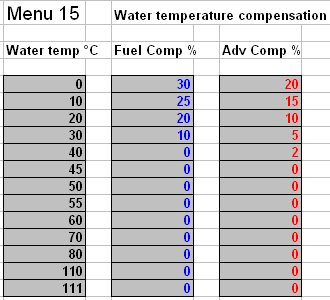
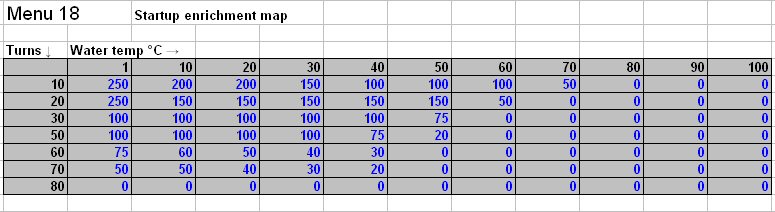
I first had my engine tuned in 2002, by Owen Developments. They gave good power figures at the time (~180 BHP) and the map seemed OK, but over the years I've gradually tweaked the settings here and there, partly to try to make the car more driveable (round the paddock etc). The most recent modification was to cure the cold starting problems which have plagued me for years. In 2006 I solved this with the help of Ash Mason's DTA map (Ash won the Midland Speed championship in 2005 and runs a Red top Vauxhall 2.0 in his Westfield). I've changed the Air temperature compensation, Water temperature compensation, and Startup enrichment maps, as per the images below, and the engine now starts on the first push of the starter button, even after it has been left standing for a week!

Here is my current map, August 12th 2006, with cold start map modifications.
 2006/08/12 DTA ECU Map for 2.0 Zetec on Jenvey TBP45mm throttle bodies

Below are the settings which cured the cold start problems.
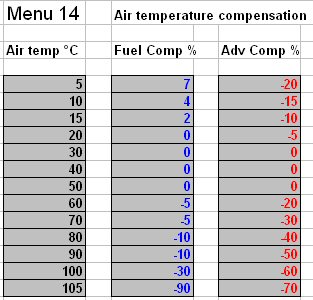
Air temperature compensation map
Menu 14

Water temperature compensation map
Menu 15

Startup enrichment map
Menu 18

There is also a very good forum, for DTA users to swap ideas, exchange maps etc.
Click on the logo below to visit the forum.

Throttle position sensor

In order for the ECU to work, it needs some feedback from the engine. One of the many inputs it requires, is the position of the throttle. ie have you got your foot flat on the floor, or is the engine idling? Fuelling requirements are very different for these two throttle openings, and consequently it is the job of the ECU to adjust the mixture according to the amount of fuel required.

So you need to fit a sensor on to the throttle spindle, to allow the ECU to decide on the position of the throttle. This is accomplished by fitting a Colvern type potentiometer to one of the ends of the throttle bodies. The purpose of the pot is to provide a linear electrical signal to the ECU, proportional to the amount of throttle opening. The Jenvey potentiometer fits directly on to the end of the throttle body, and there is a small amount of adjustment required to 'zero' the pot when fitted. The DTA software, which runs on a standard IBM Compatible PC or Laptop, shows the throttle position on the screen, and allows you to set the stops for 0% and 100% throttle. This only needs to be done once. The ECU then remembers the settings for the future.

Colvern type throttle position sensor

Inlet manifold

I bought the inlet manifold from Burton's. Cost is approx £140. Its designed for use with 45mm carbs. Manifold studs were purchased from Halfords, and cost approx 65p each. The manifold is specifically designed for the Zetec engine, and will accept either carburettors or throttle bodies.

Inlet manifold

Air horns

Air-horns, mounted on the 'intake' of the throttle bodies, channel air through the throttle body and in to the engine. Jenvey recommend that you use long air-horns and long manifolds on the Zetec. Richard Jenvey says has heard of several users that have gone for a really short manifold, short bodies & air horns, and they're 40 BHP down on potential maximum power. So the rule of thumb is 'Longest is best'.

Now, I have a problem, in that there's not much room between the firewall and the inlet of the bodies. Jenvey recommend that you don't have a flat surface directly in front of the air-horns either. As air is drawn in to the bodies, reflections build up in the gap between the bulkhead and the air-horns, and these deflect air away from the air-horns, causing loss of power. So I need enclose the horns within a Pipercross foam filter element to help keep the reflections down to a minimum.

40 mm 45 degree radius air-horn

Throttle linkage

Where the two bodies sit side by side on the manifold, the linkage from one body is designed to attach to the linkage of the adjacent body, so that both sets of throttles open when only one is operated.

Because Jenvey manufacture the bodies to fit any manifold, you need to cut the linkage bar that operates the second throttle, according to the distance set between the two throttle bodies. In the picture below, you can see that the bar is too long for my setup, so I need to shorten the linkage to prevent it from hitting the casing of the second throttle body when operated.

Throttle linkage kit Close up of linkage bar

Once the linkage bar has been trimmed to the right length, you can fit the two bodies on to the inlet manifold, and assemble the Jenvey Linkage kit. This kit connects the throttle cable between the pedal and the throttle bodies. With the kit are instructions for assembly, and its quite easy to put together. I've bought some manifold studs from Halfords, together with red studlock, and I've fitted the studs to the manifold to allow the throttle bodies to be fastened in place. I still need to replace the nuts I've used with stainless nyloc nuts, and also trim the studs to a shorter length, as they're a bit on the long side.

Throttle linkage kit Throttle linkage kit

Fuel Injectors

I was quite surprised to find that Jenvey don't sell fuel injectors. The reason is that there are so many different types available. Richard Jenvey's advice is to get some injectors from a car that produces a similar amount of power. I'm looking for 165BHP as standard, so I need to source some from a manufacturer for a vehicle that produces that sort of power. Probably from a Vauxhall or a BMW. If you go for injectors that are from a vehicle that produces much more HP than you need, then you will end up with a rough idle, but possibly more power at the top end. Conversely, if you end up with injectors too small, you will loose power at the top end, but the idle and bottom end power delivery will be really smooth, up until the point where the injector runs out of capacity.

To workout the correct fuel flow rate per injector, Weber use the formula below:


BHP X 5
-------- = injector CC (flow in cubic centilitres)
No Cyls

I have a set of blue and a set of green injectors. The blue injectors are marked as IW030's and they flow 189.4cc/min and were originally specified for 1.6 CVH and 2.0 DOHC engines. They should be alright for approx 165BHP. The next injector in the Weber range, the IW031's, which are green, flow 308cc/min which gives a 4 cyl BHP rating of 246. I am running with these in 2002, and the car was tuned with them fitted, achieving 178 BHP at 6243 rpm. Not bad eh?

Power graph

Here are some pictures of the throttle bodies when I first assembled and fitted them, with the blue injectors.

Weber Alpha injectors Weber Alpha injectors Weber Alpha injectors First time bolted on to the engine, to see if everything fits. How does an injector work?

An injector has a high pressure fuel feed at the top (typically), and an outlet at the bottom. Inside the body of the injector, a small electromagnetic coil operates on a steel diaphragm. When the coil is energised, the diaphragm lifts, and allows fuel to pass through the body, and out of the bottom of the injector, as a fine spray. When the coil is de-energised, the diaphragm releases, and the fuel pressure acting on the diaphragm, closes the seal, and fuel is prevented from travelling through the injector body. This can be heard in operation as a faint ticking sound, coming from the injectors on your car.

Injectors are switched on and off by the ECU, and are controlled using a technique called Pulse Width Modulation. Ideally, injectors should have a duty cycle of around 80% when maximum power is generated, therefore you want an injector that allows sufficient petrol through at an 80% duty-cycle. As you progressively open the throttle, the ECU measures the throttle opening via the throttle potentiometer, and it adjusts the duty cycle of the injector to richen the mixture as required. The richer the mixture, the longer the duty cycle of the injector, up until the point that it is almost on 100% of the time. Well, this would be the case if the injector were of a smaller capacity than that required by the engine. This is why you need to get the right injectors for your application.

Why not use the Mondeo Zetec injector?

Because they don't fit. The picture below shows that the Zetec injector is a side feed, not a top feed, so I can't use them with the throttle bodies, which require top feed injectors.

Ford Mondeo injector

What about the ignition?

The standard Mondeo Zetec engine features an ignition system known as wasted spark. This system comprises of an ignition pack, which has two coils inside. Each coil feeds two spark plugs. The ECU controls the ignition pack and fires alternately between pairs of spark plugs. This is why its called wasted spark. On the top of the exhaust stroke, the spark plug is fired, at the same time that the plug in the cylinder on the compression stroke is also fired, igniting the mixture, and starting combustion. So a spark is wasted, but at what cost?

On non-fuel injected engines, you would have a distributor, driven off the camshaft. This device features a rotating arm (rotor arm) which spins round inside the distributor cap, and it directs the high tension electricity supplied by the ignition coil, to each spark plug in turn. Timing is controlled by a weight inside the distributor, and as the distributor spins, the weights move according to the amount of centrifugal force acting on them. This is the advance/retard mechanism. A vacuum pipe from the carburetor also acts upon a diaphragm within the dizzy, which also controls the amount of advance/retard, depending on the amount of throttle. A complicated and crude way to control the ignition timing.

A fuel injected engine (distributorless) requires a method of determining the position of the crank shaft, and the cam shaft. The Zetec flywheel has a series of holes machined around the circumference of the wheel, and a proximity detector sends pulses to the ECU to let it know the crankshaft speed. Another proximity detector on the camshaft sends the position of the cam back (as an angle) to the ECU. From this angle, the ECU can determine the firing order of the engine, and the timing, so it can control the injectors and the ignition pack to fire the spark plugs at precisely the right time for a perfect burn.

What else will I need?

A lot of parts, and if you're fitting the Jenvey & DTA 3D system, you will need to get the following items. Part numbers are in [brackets] along side the description.

Fuel pressure regulator [Webcon]
The fuel supply on an injection system, must run at a consistent, regulated pressure. The injectors are precision engineered devices, and can only pass fuel at their calibrated flow rate, if they in turn are supplied with a clean flow of fuel, at a regulated pressure.

The fuel arrives at the regulator under high pressure (>3 bar), and unused fuel returns to the fuel tank from the regulator, thus forming a continuous flow of fuel around the system. The pressure regulator sits at the end of the fuel rail, and guarantee's that the pressure in the fuel rail is constant. The regulator varies the fuel pressure proportional to the vacuum applied to the vacuum pipe feed pipe on top of the regulator. When the throttle is depressed, and the vacuum in the inlet manifold reduces, the fuel pressure regulator increases the fuel pressure, to cope with the extra demand from the injectors.

Ford Mondeo injector


Fuel Pump [Webcon WFP503]
Essential for the delivery of a high pressure fuel supply to the fuel injectors, it must be mounted close to the fuel tank on rubber mountings to reduce the noise. It draws fuel from the fuel tank, through the filter, and pushes it on to the fuel rail and regulator.

The pump must be protected from debris in the fuel, so the order must be: Fuel Cell, Filter, Pump, Fuel Rail, Regulator, Fuel Cell.

Fuel Pump


Fuel Filter [Webcon WFF042]
This must go in line before the fuel pump. Not only are you protecting the injectors from debris in the fuel, but the pump must also be protected. Pumps are expensive, filters aren't!

Fuel Filter


Lambda Sensor [Webcon WLS115]
This device measures the air/fuel ratio in the exhaust gas, which helps the ECU adjust the mixture so the engine doesn't run too lean or too rich. It should be fitted approximately 6 to 8 inches after the exhaust manifold branches join to become a single pipe. A 16mm (5/8") hole should be drilled in the exhaust pipe, and the sensor boss should be welded into the hole, and then the Lambda sensor screws in to the boss, and sits in the flow of exhaust gases. Ideally, the sensor should also be mounted vertically.

This is the sensor that DTA recommend. It is a Bosch 0 258 104 002 which is one that Webcon supply to Mountune and Pectel for their logging systems. I understand that it is quite special in the way it operates and the original fitment is actually a MAN truck!

It features four wires. Two for the sensor (black=signal, grey=earth), and two for the heater element inside the sensor. The heater element is required for starting, to get the sensor in to its calibrated operating range.
I've shortened the leads, as they were 2M long! I've used an Amphenol water proof connector from WWW.RSWWW.COM, #246-8436. I've also had to crimp the connectors to the wires using a crimp tool, as the grey wire from the sensor just would not take any solder. Its as if its made from steel wire, and not the usual tinned copper wire, so forget trying to solder any connectors on to this sensor cable. Use a crimp tool!
Lambda Sensor


Water Temperature Sensor (WTS) [Lucas SNB802]
The ECU needs to know the temperature of the engine itself, so it can decide when to switch the electric cooling fan off, to stop the engine from overheating, and the determine if the engine is being started from cold, so the fuel mixture is automatically richened, like the choke works on a carburetor. The WTS is from a Jaguar, and doesn't fit directly in to the thermostat housing without modifications. Jim Hearne has kindly re-tapped the housing, so the WTS screws in to the same hole as the original sensor. The sensor requires a female AMP mini-timer connector.

Water temperature sensor

Air Temperature Sensor (ATS) [Lucas SNB801]
The ECU needs to know the temperature of the air that is being drawn in to the engine. This allows the ECU to vary the mixture, to compensate for the air density, which is proportionate to the air temperature. It needs to be mounted next to the throttle body trumpets, preferably in the air box, or inside the filter element. It requires a female AMP mini-timer connector.

Air temperature sensor


Connectors for the sensors
Crimps, fuel injector AMP 2-pin mini-timer connectors, and 3-pin Ford ignition coil connectors are all available from Webcon. (Part numbers are on the Electrics page)
Mini AMP connectors Injector connectors Ignition coil connector
Rate this page
Locations of visitors to this page

Related Sites and Friends:
xrtwo.com, turbosport.co.uk, Race-technology.co.uk, Quaife.co.uk, Earls.co.uk, Jenvey.co.uk, Rally Models, bloodhoundssc.com, Website stats

All content © 2008 zetecinside.com and it's contributors. All rights reserved.