
The Story so far
Last on December 31 2015
The journey begins in July 1992, when I bought a very sorry looking sunburst red Mk1 Ford Fiesta XR2, a stolen-recovered insurance write-off. (Note: The car originated from Wales, and as the shell was only 9 years old at the time, it was too good an opportunity to miss.)
When I collected her from the breakers, I found that the 1600 X-flow engine was seized. So I located a 1300cc x-flow, rebored it to 1372cc, and with new pistons, bearing shells, oil pump, Kent BCF2 and Janspeed manifold, mated to the 1600 XR2 gearbox, she felt quite quick, but the car just wasn't fast enough (are they ever?).
Her initial cross-flow powered competition debut was in September 1992. After rebuilding the car and getting it through an MOT, I entered the Ultimate Fast Car sprint at Manby in Lincolnshire, run by Fast Car magazine. After several run-offs, I came away with the trophy for the 'Up to 1400cc' class, for taking first place. I'd built and raced the fastest 1400cc car in Britain!! A taste of things to come, though I felt that the car definitely needed more power. The seeds had been sown...
And a change in employer meant that I was fortunate enough to have my first company car for a couple of years, so the XR was pensioned off, to allow for some more serious modifications.
 I've always had a few ideas about transplanting a different engine, and these web pages contain a record of what I've achieved so far.
My childhood heroes were my father, who brought me up in the world of grass track racing (Hillman Imp), road rallies (Talbot Sunbeam), and spectating on forest rallying.
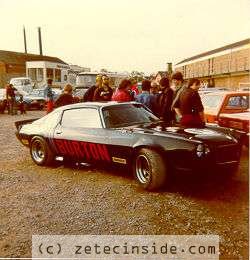
And Jim Mensley, 1970's British Hot Rod champion who lived across the road from me, in Barrow-On-Soar, and whom progressed from Hot Rods through to the mighty Thundersaloons.
He started with a Mk2 Escort in Rods, and was the the first competitor to use the revolutionary new Toyota Starlet with success.
And in Thundersaloons he developed an awesome V8 powered Rover SD1, moving on to a Chevrolet Camaro (a space-framed ex-Unser car imported from the States) and eventually running a V8 Honda Legend with very good results. Mark Wright, who developed the cars with Jim, runs his own business http://www.markwrightmotorsport.co.uk/, and Jim's two sons, Paul and Tom, both race in the UK Tin Tops scene, in an ex-BTCC Production Cup Ford Focus.
I've always had a few ideas about transplanting a different engine, and these web pages contain a record of what I've achieved so far.
My childhood heroes were my father, who brought me up in the world of grass track racing (Hillman Imp), road rallies (Talbot Sunbeam), and spectating on forest rallying.
And Jim Mensley, 1970's British Hot Rod champion who lived across the road from me, in Barrow-On-Soar, and whom progressed from Hot Rods through to the mighty Thundersaloons.
He started with a Mk2 Escort in Rods, and was the the first competitor to use the revolutionary new Toyota Starlet with success.
And in Thundersaloons he developed an awesome V8 powered Rover SD1, moving on to a Chevrolet Camaro (a space-framed ex-Unser car imported from the States) and eventually running a V8 Honda Legend with very good results. Mark Wright, who developed the cars with Jim, runs his own business http://www.markwrightmotorsport.co.uk/, and Jim's two sons, Paul and Tom, both race in the UK Tin Tops scene, in an ex-BTCC Production Cup Ford Focus.
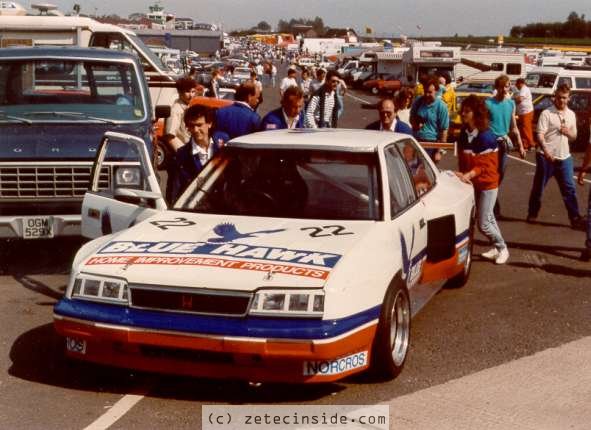 As a kid I was lucky enough to spend a few hours every now and again, helping make tea / generally loitering in his workshop, watching his team at work preparing and reparing his race cars.
And in the paddock at Hednesford, seeing Barry Lee, Pollard and the other drivers, back in the glory days when Hednesford would attract capacity crowds. Then it was cold sunny afternoons spent at Mallory Park, and Donington (my two local tracks) with the Rover V8, the Chevrolet Camaro and the awesome V8 Honda.
As a kid I was lucky enough to spend a few hours every now and again, helping make tea / generally loitering in his workshop, watching his team at work preparing and reparing his race cars.
And in the paddock at Hednesford, seeing Barry Lee, Pollard and the other drivers, back in the glory days when Hednesford would attract capacity crowds. Then it was cold sunny afternoons spent at Mallory Park, and Donington (my two local tracks) with the Rover V8, the Chevrolet Camaro and the awesome V8 Honda.
I've always been immersed in the world of speed, and power, and although initally working with limited funds, I'm really keen to prove that I too can build a winning car.
Reasons for transplanting a different engine
The Ford X-flow is a very compact and strong engine. It is of course a very old design, but if you are prepared to spend a couple of grand, you can tune it to produce a healthy amount of power.I wanted a 'modern', 16-valve engine, capable of running on unleaded fuel, which would provide at least 150 horsepower, with little expenditure. I toyed with using a Rover K-Series engine, which is another extremely tuneable unit, but I would have to have used a Rover gearbox, drive shafts, hubs etc, which would push the conversion costs through the roof. So after some research, I opted for the Ford Zetec (formerly Zeta) engine. Readily available from breakers yards the world over, many have since copied me, and the plethora of Mk1 and Mk2 Fiestas running Zetecs have all followed in my footsteps.
I installed and ran the Zetec 2.0 (with 180BHP) from 2003-2008, entering sprints and hillclimbs as a registered competitor in the Midland Speed Championship, and with many firsts in class, a 16th overall at Cadwell in 2006, and a 3rd overall at Barkston Heath. Many trouble free hours with the Zetec lead me to develop the chassis, brakes, induction system, and I could also concentrate on learning the tracks and really get to learn the cars characteristics.
The transition from Zetec to Duratec
Speaking to Matt Downer (Mk2 Escort SBD Duratec) at the June 2008 Epynt hillclimb, I finally realised that the new Duratec engine had far more potential than the Zetec, due to its extraordinary light weight and compact size. Matts Duratec, produces almost 300BHP on a standard crank, which just shows the Duratecs potential.After making a few enquiries, I managed to find a new Fiesta ST150 2.0 Duratec Engine and IB5+ Gearbox, which were dropped in to the XR2 in August 2008. I then sold my 2.0 Zetec and BC gearbox, keeping the LSD, and with no going back, I started the installation of the new engine in earnest.
The Ford Zetec engine was designed to follow the same route as all previous Ford engines. In that the Zetec flywheel housing had the same bolt pattern as all previous Ford engines (Pinto, CVH, X-Flow etc). This meant that the Escort/Fiesta 4 and 5-speed gearboxes (BC/B5 and the later cable change IB5), as well as the MTX75 box found in the Mondeo, and the Getrag 6-speed box from the Focus, would all mate to the Zetec engine.
This was a real bonus, as space is limited in the Fiesta, and I didn't want to have problems fitting an unusual gearbox. The Getrag and the MTX75 gearboxes are both very large (and heavier than the Escort/Fiesta FWD boxes), and would't fit in the Fiesta without serious modifications to the inner chassis rail and suspension tie-bar. So in 2001 I bought a Fiesta RS1800i 16V gearbox, and cut the chassis out and plated it back up to add the strength back in. The box was then rebuilt by Quaife using their reliable heavy duty straight cut gearkit, and their automatic torque biasing limited slip differential, fitted together with a 3.857:1 final drive for great acceleration.
The new all alloy Duratec engine, designed by Mazda, however has a different bell housing to the Zetec, so my BC box doesn't fit on the Duratec, nor does the IB5 from later model Fiesta's and the Focus. The IB5+ (IB5 Plus) gearbox produced by Ford is a revision of their later IB5 fwd box, that accomodates the different Duratec flywheel housing bolt pattern. This box comes in five speed and reverse configuration (with syncro on all gears) and is the same shape and size externally as the BC/B5/IB5 box. So it will fit in the Fiesta Mk1 if the chassis rail is modified to accomodate a five speed gearbox.
So as of 2008, I left the Zetec world, and moved firmly in to the 21st century with the all new Mazda Duratec engine and IB5+ gearbox.
During the conversion to Duratec, I had a pair of equal length GpA shafts manufactured by Commercial Propshaft Services, which combined with the larger Fiesta ST Trilobe bearings, should withstand at least 260 HP. I've also fitted Titan Roller Barrel throttle bodies, a DTA S80 ECU, and a Tony Law race exhaust system, which should give me around 200BHP without too much more expenditure.
The end result
After >20 years of ownership, in 2010 this was how my 28 year old XR2 looked (Picture taken Aug 2010) with the 2.0 Duratec fully installed and running. I'm still very pleased with the end result, and I expect to have many more years of adrenaline filled fun behind the wheel.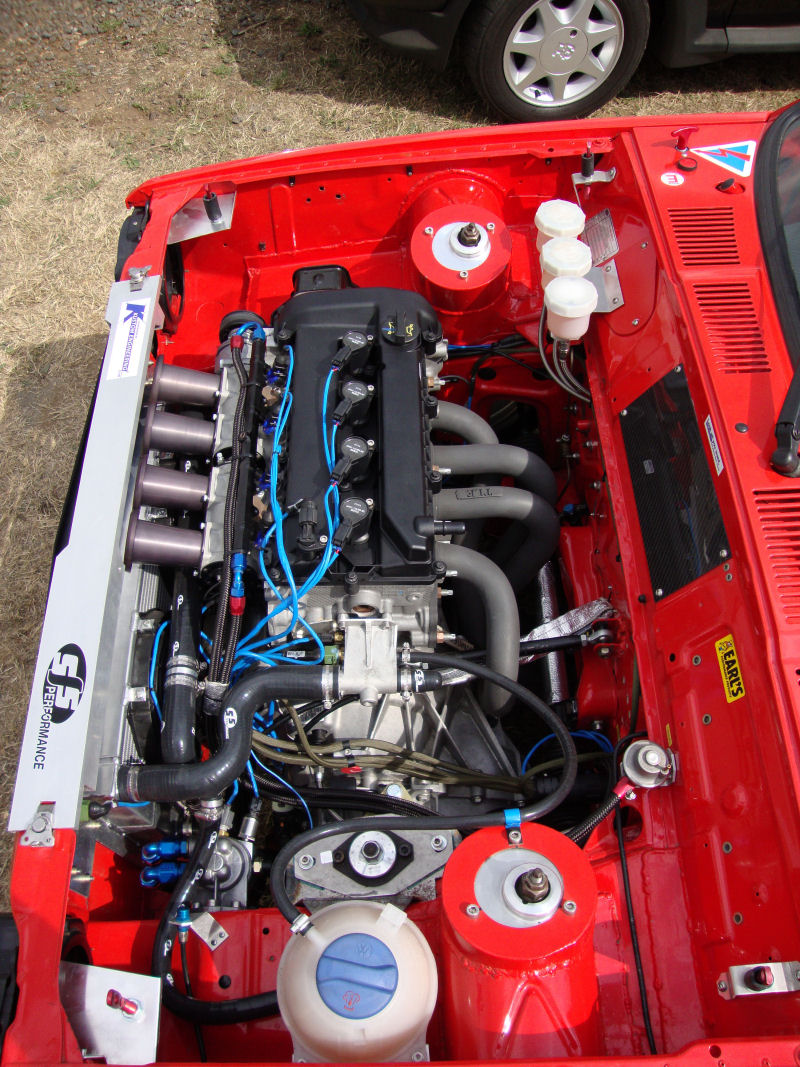
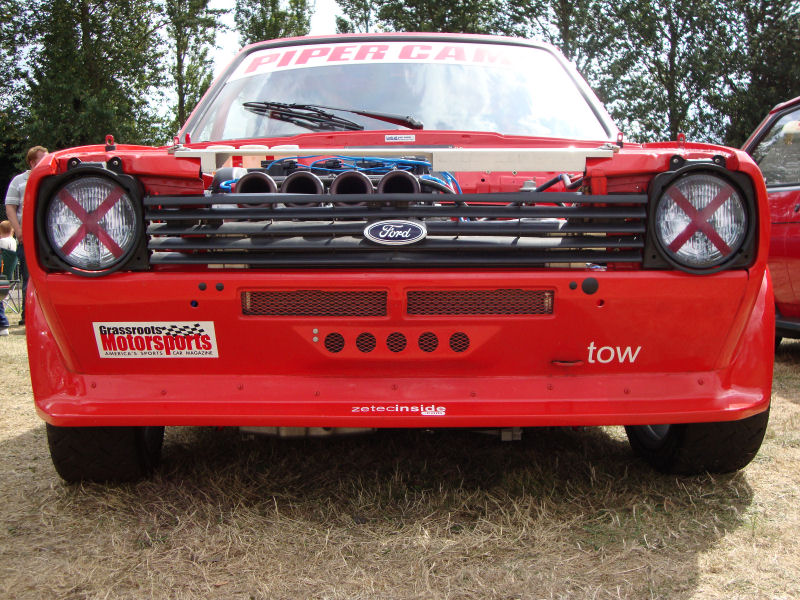
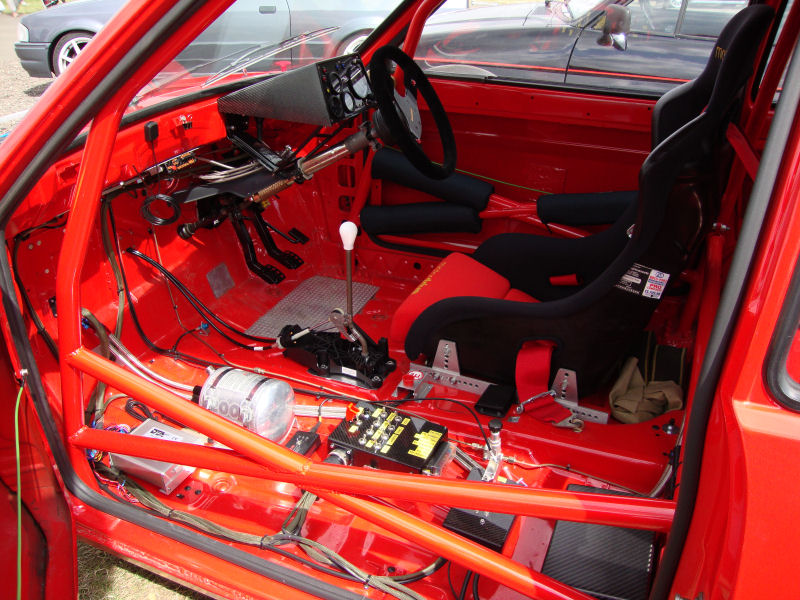
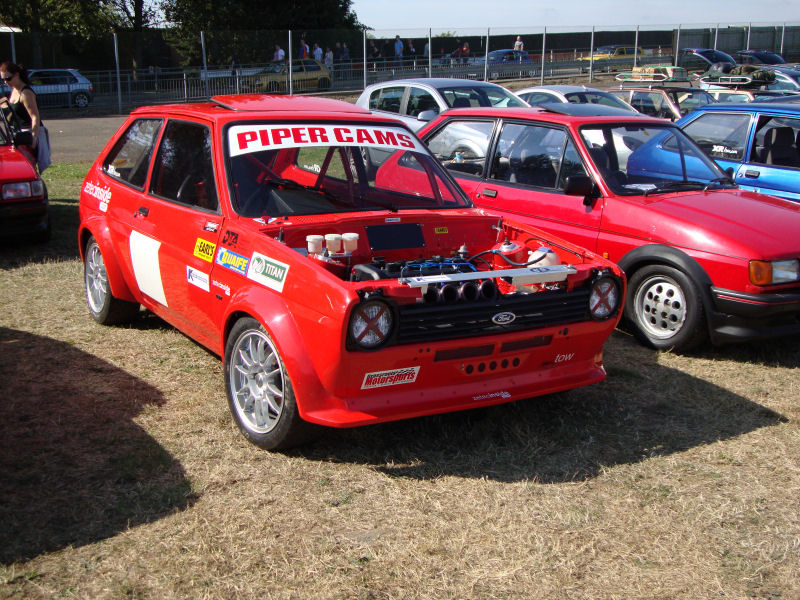
A few pictures of the Ford "Works" rally car, from 1979
I'm not going to give a complete history of the Fiesta, there's plenty of other sites out there that already provide that information. Instead, any interesting photos of the Mk1 that I can find, I'll post them here.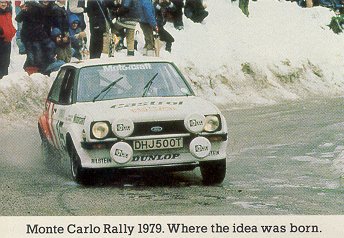
As driven by Ari Vatanen, and co-driven by David Richards (The boss of Prodrive!) in 1979, on the Monte Carlo. The car finished in 10th place.
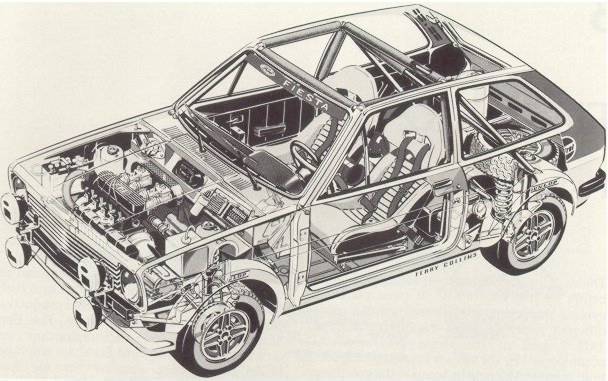
This is a cutaway drawing of the Works rally car, showing some rather interesting tweaks to the front suspension, and even a disk braked rear axle.
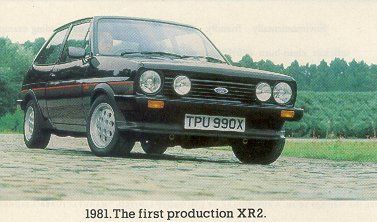
And finally, a picture of the very first XR2 to roll off the production line.
Why tell the world?
In 1998 I decided to place this information on the WWW because when I started, there wasn't that much information available for modders like myself. The situation has improved over the years, but some sites present the information better than others, and I hope that Zetecinside.com is probably the most informative and accurate site regarding the Zetec & Duratec engine's, and of course, the Mk1 Fiesta.I started with a bit of web space on virgin.net/graham.blackwell, then bought a domain name, and finally found cheap affordable hosting at pair.com, which is where the website has sat since 1999.